
Robotic Surgery (RABIT-RAT) for Retrosternal Goiter
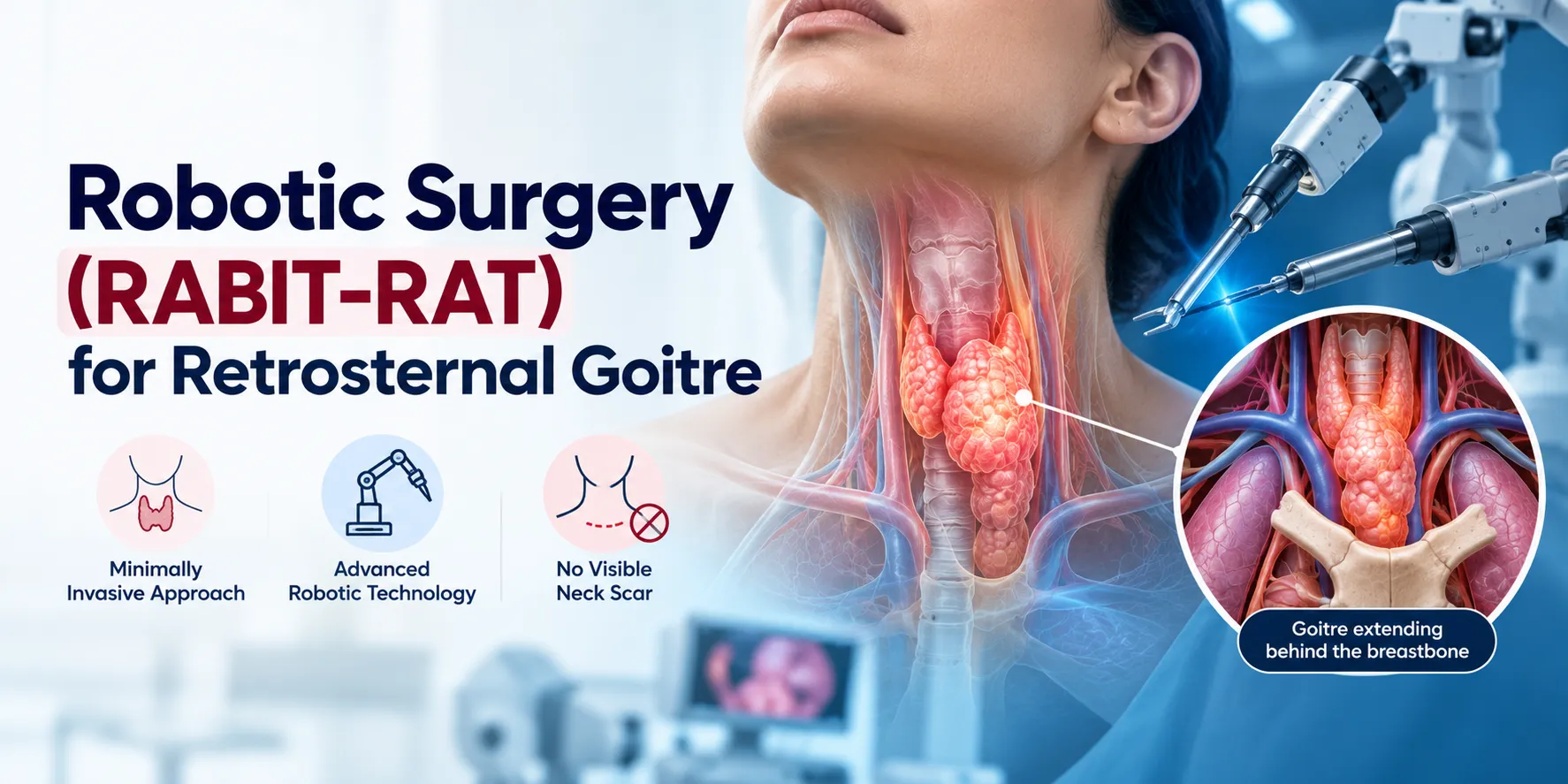
Thyroid swelling usually occurs in the neck region. But in some cases, the enlargement may grow downward from the neck and extend to the chest area, behind the breastbone. This enlargement is called retrosternal goiter. The growth will continue to press against the windpipe or food pipe, making breathing or swallowing uncomfortable.
With robotic surgery for retrosternal goiter, a minimally invasive procedure can be used. By using RABIT and robotic-assisted thoracoscopic surgery (RATS), the enlargement can be removed without having to cut open the breastbone.
As Dr. Sandeep Nayak says, “The location of a retrosternal goiter is as important as its size. The CT scan helps to find out its relationship to the windpipe and the major blood vessels, helping the surgeons choose the safest approach.”
Dr. Sandeep Nayak is an internationally acclaimed surgical oncologist in India. He pioneered the RABIT thyroidectomy technique and has experience in robotic thyroid and complex head and neck surgery.
What Is Retrosternal Goiter?
A retrosternal goiter occurs when an enlarged thyroid gland extends below the neck into the chest cavity, behind the sternum.
It may develop gradually over several years. Some patients experience no symptoms, while others notice:
Most retrosternal goiters are benign, although suspicious nodules require investigation.
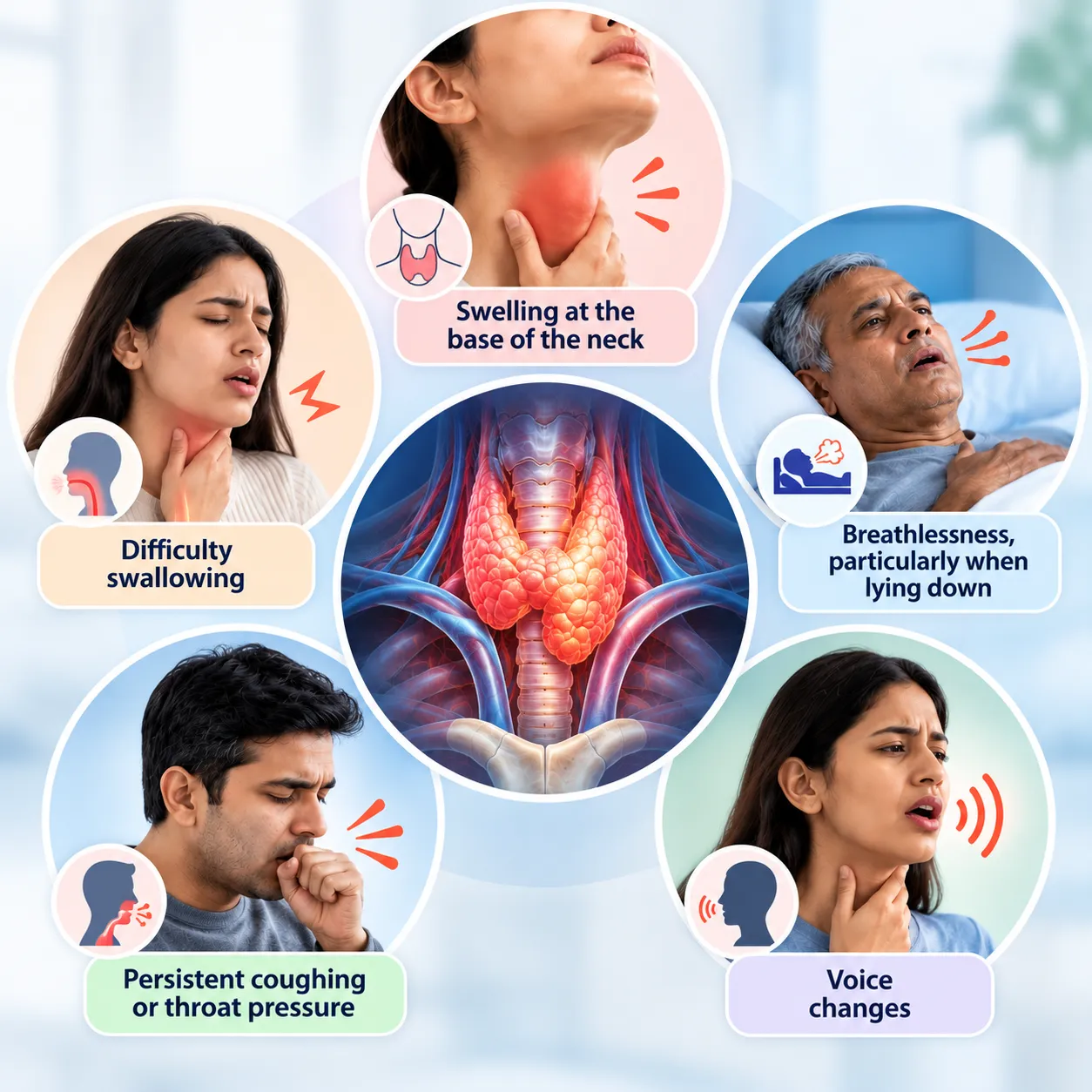
Why does a thyroid swelling extend into the chest? Let’s understand how its position affects treatment for retrosternal goiter.
What Is Robotic Surgery for Retrosternal Goiter?
Robotic surgery uses surgeon-controlled instruments and magnified three-dimensional vision to remove the enlarged thyroid through carefully positioned incisions.
For selected retrosternal goiters, two approaches may be combined:
The combined approach may avoid sternotomy, although some patients still require conventional surgery.
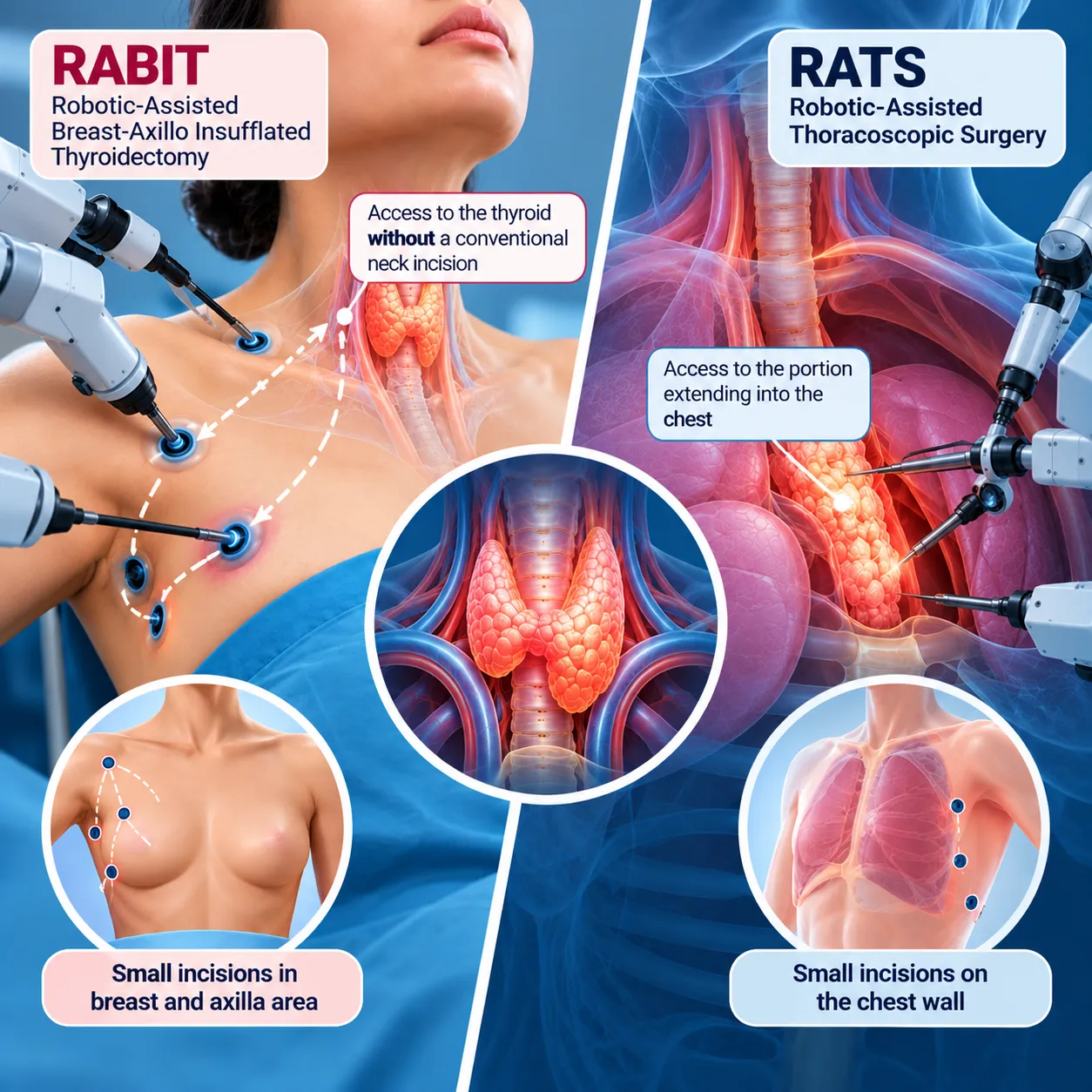
How Does RABIT-RAT Robotic Surgery Work?
The procedure is performed under general anesthesia.
Surgical Steps

The exact technique depends on the goiter’s anatomy and the extent of chest involvement.
What advantages may robotic access offer? Let’s examine its potential benefits.
Benefits of Robotic Surgery for Retrosternal Goiter
Potential benefits of RABIT-RAT robotic surgery include:
Avoidance of a visible neck incision in suitable patients
Smaller, strategically positioned incisions
Magnified three-dimensional surgical vision
Precise instrument movement around delicate structures
Possible avoidance of breastbone division
Potentially reduced wound discomfort in selected cases
These advantages depend on patient selection and surgical experience.
Robotic surgery is not automatically safer or more effective than conventional thyroidectomy for every patient.
Can everyone with a retrosternal goiter undergo robotic surgery? Let’s review the selection criteria.
Who Is a Candidate for Robotic Retrosternal Goiter Surgery?
Robotic surgery may be considered when the goiter can be safely accessed and removed using minimally invasive techniques.
Doctors evaluate:
Size and depth of chest extension
Relationship with the windpipe and major blood vessels
Previous neck or chest operations
Suspicion of thyroid cancer
General health and anesthesia fitness
Very large, invasive, or unusually positioned goitres may require open surgery.
How does robotic surgery compare with traditional techniques? Let’s examine the differences.
Robotic Surgery vs Conventional Surgery for Retrosternal Goitre
| Feature | Robotic Surgery | Conventional Surgery |
| Access | Remote small incisions | Neck incision, sometimes sternotomy |
| Visualisation | Magnified 3D view | Direct surgical view |
| Neck scar | May be avoided | Usually present |
| Operating time | May be longer | Varies with complexity |
| Recovery | Depends on surgical extent | Depends on surgical extent |
| Suitability | Selected patients | Broad range of cases |
Most retrosternal goiters can be removed through a conventional neck incision without sternotomy. Robotic surgery offers another option in appropriately selected cases.
Which thyroid conditions may require this approach? Let’s review the relevant indications.
Conditions Treated
Robotic retrosternal goiter surgery may be considered for selected patients with:
Substernal enlargement of thyroid
Thyroid tissue extending behind the breastbone;
Compressive goiter
Enlargement affecting breathing or swallowing;
Selected nodules of the thyroid gland
Growths requiring removal after clinical assessment;
Selected malignancies of the thyroid gland
only in cases when cancer is confined to certain borders for robotic surgery to be appropriate.
Surgery is recommended based on symptoms, imaging findings, and clinical risk.
What complications should patients understand before surgery? Let’s examine the safety considerations.
Risks and Safety
Like conventional thyroidectomy, robotic surgery carries certain risks.
Possible complications include:
Bleeding or infection
Temporary or permanent voice changes
Injury to the recurrent laryngeal nerve
Breathing difficulties
Complications involving nearby chest structures
Conversion to open surgery when necessary
Careful imaging, anesthesia assessment, and experienced surgical technique help manage these risks.
What should patients expect after the operation? Let’s understand the recovery process.
Recovery After Robotic Retrosternal Goiter Surgery
Recovery varies based on the size of the goiter, the surgical approach, and the patient’s general health.
Recovery varies based on the size of the goiter, the surgical approach, and the patient’s general health.
Monitoring of breathing capacity, vocal changes, bleeding, and blood calcium levels is done post-surgery.
Patients usually experience minor pain at the surgical site.
Once the thyroid is removed entirely, a patient requires lifetime thyroid hormone replacement therapy.
Post-operative follow-ups allow evaluation of wound healing, thyroid hormone levels, and histopathology findings.

FAQs
Can retrosternal goiter be removed robotically?
Yes. Selected cases may be treated using RABIT and robotic-assisted thoracoscopic techniques.
Who performs robotic retrosternal goiter surgery in Bangalore?
Dr. Sandeep Nayak has years of experience with RABIT and combined robotic approaches for selected complex thyroid conditions.
Is chest opening necessary for retrosternal goiter?
Not always. Most cases can be managed through a neck incision, while selected patients may benefit from robotic access.
How long is recovery after robotic thyroid surgery?
Recovery varies. Patients often gradually resume light activities, following their surgeon’s instructions.
Does robotic thyroid surgery leave scars?
Small scars remain at the incision sites, but a visible scar across the front of the neck may be avoided.
References
- Robotic-Assisted Breast-Axillo Insufflation Thyroidectomy: Clinical Case Series. Peer-reviewed research by Dr. Sandeep Nayak and colleagues.
- Scarless Thyroidectomy: The RABIT Journey in Robotic Innovation. Surgical technique overview co-authored by Dr. Sandeep Nayak.
- Retrosternal Goiter: Patient Story and Robotic Surgery Discussion. Describes the combined RABIT and RATS approach.
Disclaimer: The information shared in this content is for educational purposes and not for promotional use.