
Sinus and Nasal Cavity Cancer: Symptoms, Causes, Diagnosis, Treatment, and Prognosis
Sinus and nasal cavity cancer develops in the spaces behind and around the nose, regions most people associate with nothing more than a blocked nose or sinus infection. That familiarity makes it difficult to catch early, as its symptoms closely resemble those of common benign conditions. It accounts for about 5% of all head and neck cancers and around 1% of all malignancies globally.
Dr. Sandeep Nayak, an esteemed surgical oncologist in India, notes that the greatest challenge with this cancer is not the treatment itself but the delay in diagnosis. He emphasizes that any nasal symptom persisting beyond a few weeks, especially on one side, must be evaluated rather than dismissed as routine.
With over two decades of experience, Dr. Nayak specializes in managing head and neck cancers. For patients seeking sinus cancer treatment in India, his practice offers advanced surgical care, precise diagnosis, and a treatment approach that prioritizes both cancer control and quality of life.
Let’s start with the basics.
What is Sinus and Nasal Cavity Cancer?
Understanding this cancer starts with knowing exactly where it begins.
The nasal cavity is the hollow space inside the nose through which air passes to the throat. Surrounding it are the paranasal sinuses, air-filled spaces inside the facial bones that include the maxillary sinuses (in the cheekbones), the ethmoid sinuses (between the eyes), and the frontal and sphenoid sinuses. Cancer can develop in any of these areas.
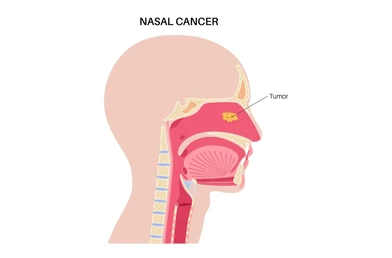
Most of these cancers occur in the maxillary sinuses or nasal cavity, are less common in the ethmoid sinuses, and are rare in the frontal and sphenoid sinuses. The most common type is squamous cell carcinoma, though adenocarcinoma and other subtypes also occur.
Most nasal cavity and paranasal sinus cancers occur in people over 50 years of age, and men are about twice as likely as women to develop them. Because the sinuses are enclosed spaces, tumors here can grow silently for a long time before causing noticeable symptoms.
Common Symptoms of Sinus and Nasal Cavity Cancer
A few specific signs separate this cancer from an ordinary sinus problem.
The symptoms of sinus and nasal cavity cancer are easy to overlook because they overlap heavily with common conditions like sinusitis or allergies. The key difference is persistence and one-sidedness. Early symptoms of sinus cancer to watch for include:
- Nasal blockage on one side that does not clear
- Nosebleeds without an obvious cause
- Reduced sense of smell

- Post-nasal drip or mucus discharge
- Pain or pressure in the face, particularly around the cheeks or eyes
- A lump inside the nose or on the face
- Loose teeth or poorly fitting dentures without a dental cause
- Vision changes or double vision
- Persistent ear pain or blocked sensation
- Swollen lymph nodes in the neck
Any of these symptoms, especially on one side and lasting more than a few weeks, warrant urgent investigation.
Have a nasal symptom that won't go away?
Connect with a specialist who can give you a clear, straightforward review of your case.
The causes are less straightforward than those of other cancers. Here’s what is known.
Causes and Risk Factors
Sinus cancer causes are not always identifiable, but several risk factors have a well-established link:
Occupational exposure.
Wood dust, leather dust, nickel, chromium, and formaldehyde are strongly associated with nasal and sinus cancer. Woodworkers and furniture industry workers carry a notably higher risk.
Tobacco use.
Smoking raises risk across all head and neck cancers, including the sinuses.
HPV infection.
Human papillomavirus has been linked to some sinonasal cancers.
Chemical exposure.
Prolonged exposure to industrial chemicals and solvents increases the risk.
Radiation exposure.
Prior radiation to the head and neck area is a recognized factor.
Age and gender.
Men over 50 carry the highest incidence.
Understanding your occupational and personal history is an important part of any risk assessment.
Knowing the stage guides every treatment decision. Here’s how it works
Stages of Sinus and Nasal Cavity Cancer
Sinus and nasal cavity cancer is staged using the standard TNM system, which considers tumor size, lymph node involvement, and spread to distant organs:
Stage I
The cancer is small and confined to one area within the sinus or nasal cavity, with no lymph node involvement.
Stage II
The tumor has grown larger but remains within the primary site without spreading.
Stage III
The tumor has extended to nearby structures or involves one lymph node
Stage IV
The cancer has spread more extensively to surrounding structures, multiple lymph nodes, or distant organs.
“Most cases of sinus and nasal cavity cancer are diagnosed at an advanced stage because early symptoms are subtle and easily missed. This underscores the critical importance of early evaluation of persistent symptoms,” states Dr. Sandeep Nayak.
Accurate diagnosis is where effective treatment begins. Here’s what it involves.
Diagnosis of Sinus and Nasal Cavity Cancer
Because symptoms of nasal cancer and sinus malignancies commonly mimic benign conditions, a systematic diagnostic approach is essential:
Clinical examination
The nose, face, and neck are examined for lumps, tenderness, or abnormality.
Nasal endoscopy
A thin camera scope allows direct visualization of the nasal cavity and sinus openings.

Imaging
CT and MRI scans show the size, location, and extent of the tumor. PET scans may be used to check for distant spread.
Biopsy
A tissue sample is taken and examined under a microscope to confirm cancer type and grade.
An experienced head and neck cancer specialist interprets all findings together to reach an accurate diagnosis and plan the appropriate treatment approach.
The right treatment depends on the stage and location. Here is how sinus cancer is managed.
Treatment Options for Sinus Cancer
Treatment for sinus and nasal cavity cancer usually involves a combination of approaches:
Surgery
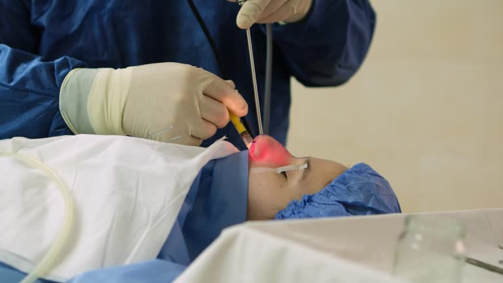
The primary treatment for most cases. Endoscopic surgery allows tumor removal through the nose without external incisions, while open surgery is used for more advanced disease.

Radiation therapy
Used alongside surgery or as a primary treatment when surgery is not suitable. It destroys remaining cancer cells after tumor removal.
Chemotherapy
Used in combination with radiation for advanced or inoperable cancers to enhance treatment effectiveness.
Targeted therapy and immunotherapy
Increasingly used for specific cancer subtypes or recurrent disease.
Treatment planning for sinus and nasal cavity cancer is complex and requires a multidisciplinary team of surgical, radiation, and medical oncologists working together.
Prognosis and Survival Rate
Here is an honest look at outcomes and what they depend on.
Survival outcomes for sinus and nasal cavity cancer vary significantly based on stage at diagnosis. When the tumor is confined to the nasal cavity or paranasal sinus, the five-year survival rate is around 82%. When cancer spreads to nearby structures or lymph nodes, that figure drops to 52%, and for distant spread, it is approximately 42%.
These numbers reinforce one consistent message: earlier diagnosis leads to substantially better outcomes. The challenge is that most cases are caught late because symptoms overlap with those of common benign conditions.
For patients seeking sinus cancer treatment in India, early access to a seasoned surgical oncologist can make a meaningful difference in treatment options and long-term outcomes. Advanced surgical techniques, including endoscopic and minimally invasive approaches, have significantly improved precision and recovery in recent years.
Want a clear outlook for your case?
A specialist consultation gives you a personalized picture of your options and prognosis.
FAQs
1. How rare is sinus and nasal cavity cancer?
It accounts for about 5% of all head and neck cancers and around 1% of all malignancies, with a global incidence of just 0.2 to 1.0 cases per 100,000 individuals per year.
2. What are the early symptoms of sinus cancer?
The earliest signs include one-sided nasal blockage, unexplained nosebleeds, and persistent facial pressure. Because these mimic common sinus conditions, they are frequently overlooked.
3. Can sinus and nasal cavity cancer be cured?
Yes, particularly when detected early. Stage I and II cancers have significantly better outcomes, and many patients achieve complete remission with surgery and radiation.
4. What is the survival rate for sinus and nasal cavity cancer?
The five-year survival rate is around 82% for localized disease, 52% for disease that has spread to nearby structures, and 42% for disease that has spread to distant sites.
5. What causes sinus and nasal cavity cancer?
Key risk factors include occupational exposure to wood dust, leather dust, and industrial chemicals, alongside tobacco use, HPV infection, and prior radiation to the head and neck.
6. How is sinus cancer different from a sinus infection?
A sinus infection usually affects both sides, improves with medication, and resolves within weeks. Sinus cancer symptoms are typically one-sided, persistent, and do not respond to standard sinus treatment.
7. Is surgery always required for sinus cancer treatment?
Surgery is the primary treatment for most cases. Endoscopic approaches allow tumor removal without external incisions in suitable cases, while more advanced disease may require open surgery combined with radiation.
8. Does occupation affect sinus cancer risk?
Yes significantly. Exposure to wood dust and leather dust is particularly well established as a risk factor for sinonasal adenocarcinoma.
Disclaimer: The information shared in this content is for educational purposes only. Individual results may vary. Please consult a qualified doctor for personalized advice