
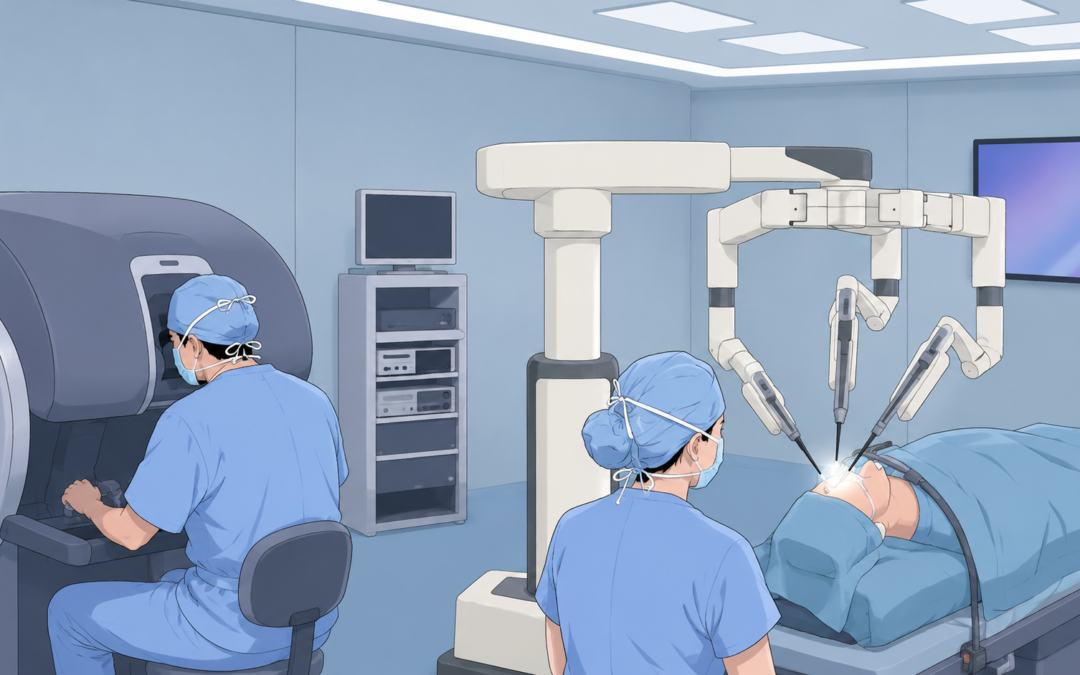
Robotic surgery for throat cancer, known as transoral robotic surgery or TORS, removes tumours through the mouth using a surgical robot, with no cut on the neck or jaw. A 3D camera and small wristed instruments reach areas like the tonsils and base of the tongue that are hard to access by hand. It mainly suits early throat cancers that a surgeon can see and reach cleanly. The aim is to clear the cancer while protecting speech and swallowing.
According to Dr. Sandeep Nayak, a Head and Neck Surgery specialist, “The real value of operating through the mouth is what you don’t have to cut. Reaching a throat tumour without splitting the jaw or neck means speech and swallowing have a far better chance of staying intact.”
Want to know if a throat tumour can be reached this way?
How does robotic surgery for throat cancer work?
The whole operation runs through the open mouth, guided by a robot the surgeon controls.
- The robot : A surgeon sits at a console and controls thin robotic arms, while a magnified 3D camera shows the throat in far more detail than the eye manages.
- No incisions : Everything passes through the mouth, so there’s no cut on the neck or jaw and nothing external to heal afterwards.
- Tumour removal : The wristed instruments reach awkward spots like the tonsil bed or base of tongue and lift the cancer out with a clear margin.
- Function first : Because nearby muscles and nerves stay undisturbed, speech and swallowing are far more likely to recover quickly.
So the technique trades a big open operation for a precise one through the mouth. It’s used most often for oropharyngeal cancer, where tumours sit within reach of the robot.
Who is robotic throat cancer surgery suitable for?
It fits some throat cancers very well and rules others out, mostly based on size and location.
- Early tumours : Smaller, early stage cancers that haven’t spread deeply are the strongest candidates for the robotic approach.
- Reachable sites : Tonsil and base of tongue tumours suit it best, since the robot can actually get to them through the mouth.
- HPV cancers : Many throat cancers linked to HPV respond well, and robotic removal can sometimes reduce how much radiation is needed afterwards.
- Not for all : Large or deeply invading tumours, or ones blocking access, still need open surgery or non surgical treatment instead.
But access is everything here, so the decision always comes back to where the tumour sits. Cancers higher up, like nasopharyngeal cancer, are usually treated a different way entirely.
Why choose Dr. Sandeep Nayak for robotic throat cancer surgery
Dr. Sandeep Nayak is a surgical oncologist in India with deep experience in robotic head and neck surgery, including transoral procedures for throat cancer. Operating in the throat through the mouth is technically demanding, the working space is narrow, and the margin for error is small, so how often a surgeon has done it matters more than the robot itself.
For patients, that experience decides whether a tumour can be cleared cleanly while protecting the voice and swallowing. It’s also what separates a case that suits the robot from one that genuinely needs open surgery. Which is exactly the call worth getting right.
Call +91 9482202240 to book your consultation.
Frequently Asked Questions
What is TORS for throat cancer?
Transoral robotic surgery removes throat tumours through the mouth, without external incisions.
Is robotic throat surgery painful afterwards?
Some throat soreness is normal, but there’s no external wound to heal.
Does it affect speech and swallowing?
Usually less than open surgery, since nearby muscles stay undisturbed.
Can all throat cancers be treated robotically?
No, only tumours the robot can reach and remove with clear margins.
References:
- Transoral Robotic Surgery, PubMed (NIH). https://pubmed.ncbi.nlm.nih.gov/28034402/
- Transoral Robotic Surgery, PMC (NIH). https://pmc.ncbi.nlm.nih.gov/articles/PMC8764010/
Disclaimer:This blog is for general information only and isn’t a substitute for advice from a qualified specialist.