
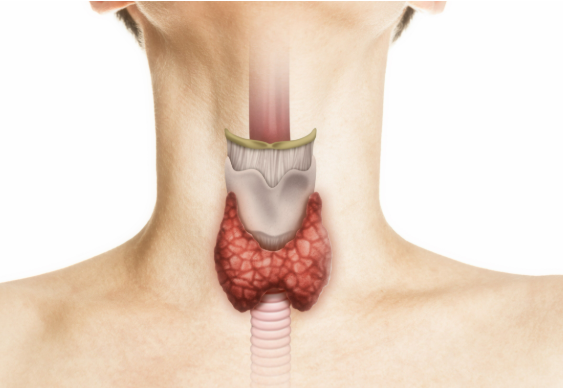
Scarless thyroid surgery removes the gland through hidden incisions in the armpit or breast area, while conventional surgery uses a cut across the front of the neck. Both remove the same tissue with similar cure rates, so the real difference is the scar, the access, and who qualifies. Conventional surgery suits almost everyone. The scarless route needs specific tumour sizes and a trained robotic team.
According to Dr. Sandeep Nayak, who also leads Breast Cancer Surgery in Bangalore, “In thyroid surgery the access route should follow the disease, not a preference for cosmetics. Scarless works beautifully when the tumour allows it, but conventional surgery stays the safer choice for advanced or bulky disease.”
Worried your case might be too complex for the hidden-incision route?
What's the real difference between scarless and normal thyroid surgery?
Both operations remove thyroid tissue the same way, just from completely opposite directions.
- Incision Normal surgery leaves a 5 to 8 cm scar across the lower neck, while the scarless approach tucks its small cuts into the armpit or breast fold.
- Access A robot reaches the gland through a tunnel made under the skin, which surprises most people since nothing actually goes through the throat.
- Scarring Front-of-neck scars stay visible for life on a very exposed area, whereas the hidden ones fade into places nobody ever looks.
- Suitability Conventional surgery covers nearly every thyroid problem including advanced ones, but the scarless route only fits selected nodule sizes and a robotically trained surgeon.
Same gland, different doorway. But the decision still comes down to tumour size and surgeon skill, and for the hidden route that means scarless robotic thyroid surgery in experienced hands.
Is scarless thyroid surgery as safe as conventional surgery?
On safety the two are closer than people expect, and most of the gap comes down to the surgeon rather than the method.
- Voice The recurrent laryngeal nerve sits right behind the thyroid and controls the vocal cords, so permanent hoarseness stays under 1% when a skilled robotic surgeon protects it under magnification.
- Calcium The parathyroid glands control blood calcium and sit millimetres from the thyroid, so the robot’s magnified view makes them far easier to save than open surgery does.
- Recovery Most patients go home within a day or two and return to desk work inside a week, with heavy lifting on hold for two weeks.
- Limits Large invasive cancers and surgeons without robotic training both push this decision firmly back toward the conventional open approach.
So if your case is a cancer, our deeper look at scarless surgery for thyroid cancer covers it. Short version: yes, in selected cases, and selection is everything.
Why choose Dr. Sandeep Nayak?
Dr. Sandeep Nayak is a surgical oncologist in India and the inventor of RABIT, the robotic technique that removes the thyroid without any neck scar. He has trained surgeons worldwide and has removed thyroid tumours as large as 15 cm through hidden incisions. Two outcomes matter most to his patients afterward. A normal voice, and a neck that looks untouched. Both hold up because magnification makes nerve and parathyroid preservation more precise than open surgery allows. That’s the whole reason to operate this way.
Call +91 9482202240 to book your consultation.
Frequently Asked Questions
Is scarless thyroid surgery completely without any scar?
No, small scars exist but stay hidden in the armpit or breast area.
Can scarless surgery treat thyroid cancer too?
Yes, it treats selected benign and malignant thyroid tumours, including some large ones.
Will my voice change after thyroid surgery?
Permanent voice change is rare, under 1% with an experienced robotic surgeon.
How soon can I return to work afterward?
Most people resume desk work within a week, avoiding heavy lifting for two weeks.
References:
- National Cancer Institute, Thyroid Cancer. https://www.cancer.gov/types/thyroid
- Thyroidectomy, StatPearls, NCBI Bookshelf (NIH). https://www.ncbi.nlm.nih.gov/books/NBK563279/
Disclaimer: The information shared in this content is for educational purposes only and not for promotional use.