
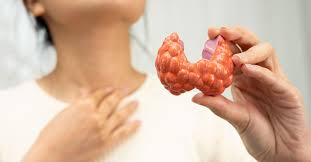
Eligibility for scarless thyroid surgery comes down to three things: the disease, the anatomy, and the surgeon’s read of both. Most patients with small or moderate nodules and early thyroid cancer qualify, since the gland can be removed safely through hidden incisions. The approach becomes unsuitable when tumours are large, aggressive, or spreading into the neck. So the real gatekeeper is your scan report, not your preference.
According to Dr. Sandeep Nayak, who also leads Breast Cancer Surgery in Bangalore, “The first question is never the scar, it’s whether the cancer can be cleared completely through this route. If a hidden-incision approach would compromise that in any way, it simply isn’t the right operation for that patient.”
Want a clear answer on whether you qualify?
What does a surgeon check before approving scarless surgery?
Approval rests on a short list of findings, most of them visible on imaging.
- Scan findings Ultrasound and CT show the tumour’s size and whether it has stayed within the gland, which is the single biggest factor.
- Nodule type A contained, well-defined nodule is far easier to clear cleanly than one with vague or invasive edges.
- Neck anatomy The space and tissue planes between chest and neck decide whether the robotic tunnel can be made safely.
- General health Fitness for a slightly longer robotic operation under anaesthesia gets weighed, just as it would for any surgery.
None of these are guesswork. They’re the same checks behind every well-planned scarless robotic thyroid surgery.
What rules someone out of the scarless approach?
A handful of clear factors move a case firmly back toward conventional surgery.
- Bulky disease Large goitres or substernal extension usually can’t be delivered safely through small incisions, so the open route wins.
- Lymph spread Cancer that has involved many neck nodes needs the broad exposure that open dissection allows.
- Prior treatment Past neck radiation or surgery can scar the planes the robot relies on, which raises the risk.
- Tight space A very narrow chest or unusual anatomy can leave the robot too little room to work safely.
But none of this is a verdict on you, only on the disease in front of the surgeon. Our deeper piece on whether scarless surgery is possible for thyroid cancer covers that side in detail.
Why choose Dr. Sandeep Nayak?
Dr. Sandeep Nayak is a surgical oncologist in India and the inventor of RABIT, the robotic technique that avoids any neck scar. Deciding who truly fits this approach is a judgement he’s built over years of cases, and one he’s taught to surgeons abroad. For patients, the takeaway is simple. A careful assessment either opens the door to a scar-free result or steers you toward the safer open route, and both answers are wins. Being told no when it matters is part of good care.
Call +91 9482202240 to book your consultation.
Frequently Asked Questions
What decides if I can have scarless thyroid surgery?
Your scans, nodule size, cancer stage, and anatomy decide your eligibility.
Can older patients have scarless thyroid surgery?
Yes, age alone rarely matters; overall health and anatomy matter more.
Does a large thyroid nodule rule it out?
Often yes, very large nodules are difficult to remove through hidden incisions.
Is a second opinion worth getting on eligibility?
Yes, candidacy can vary by surgeon experience, so a review helps.
References:
- National Cancer Institute, Thyroid Cancer. https://www.cancer.gov/types/thyroid
- Thyroidectomy, StatPearls, NCBI Bookshelf (NIH). https://www.ncbi.nlm.nih.gov/books/NBK563279/
Disclaimer: The information shared in this content is for educational purposes only and not for promotional use.